Hey NHD historians!
A brand-new National History Day season is here, and so is a brand-new theme:
“Revolution, Reaction, Reform in History.”
Sounds big, right?
That’s because it is – but don’t worry, it’s also packed with opportunities to explore awesome topics, uncover dramatic moments, and tell powerful stories that shaped the world.
So let’s break it down and get your brain going with ideas. 💡
🚨 Revolution
When people, groups, or nations decide enough is enough – that’s revolution. It’s a dramatic change that shakes up the way things were, often fast and often loud.
- Think: The American Revolution, the invention of the printing press, or the student protests of the 1960s.
- Revolutions can be political, scientific, technological, or even cultural. (Yes, the rise of hip-hop music counts!)
🔁 Reaction
Here’s where it gets interesting. Revolutions don’t just happen and end – people respond. Some love the change. Others? Not so much.
- Reaction is what people or systems do because of a revolution.
- Sometimes it’s resistance (like Loyalists during the American Revolution).
- Sometimes it’s backlash (like censorship after a free speech movement).
- Sometimes it’s fear, and sometimes it sparks even more change.
🔧 Reform
Now imagine a change that’s not a wild revolution, but more of a fix. Reform is about improvement. It might come after a revolution or instead of one.
- Think: Child labor laws, school desegregation, environmental protections.
- Reform usually comes from the inside – people trying to work with the system to make it better.
But Here’s the Real Secret:
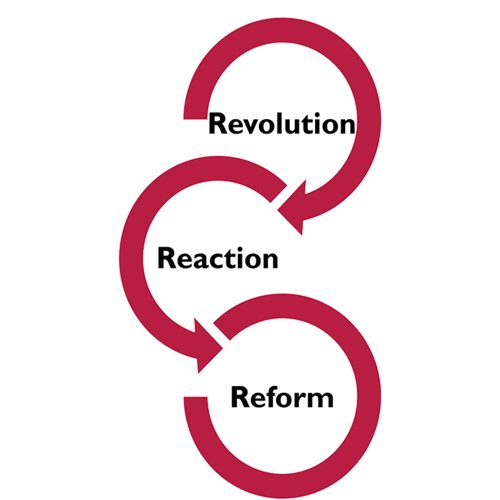
These three R’s are connected – like links in a chain.
- A revolution might cause a reaction…
- A strong reaction might force people to rethink and push for reform…
- Or a failed reform might be what finally causes a revolution!
They don’t happen in a straight line – they loop, stack, and spiral through time.
Here’s an example:
🎓 The Civil Rights Movement (reform) grew out of resistance to Jim Crow laws (reaction) which were a backlash to Black Americans gaining rights after the Civil War (revolution).
One thing leads to the next.
🔍 What This Means for You
When you’re choosing a topic for your 2026 project, ask yourself:
- Is there a moment of revolution here?
- Was there a reaction – positive or negative?
- Did anything lead to reform (or try to)?
If you can trace at least two R’s – or even all three – you’ve got a powerful project waiting to happen.
💡 Quick Topic Starters:
- The invention of the internet – revolution in communication?
- The fall of the Berlin Wall – reaction to Cold War tensions?
- Title IX – reform in women’s sports and education?
More of a sports fan? Music lover? STEM nerd? History has R’s everywhere.
Find a story that matters to you – and start digging.
🧭 Let’s Do This
Revolution, Reaction, Reform – it’s not just a theme, it’s a lens for understanding history.
And YOU are about to become the expert.
Get curious. Ask questions. And remember: The best projects don’t just tell what happened… they tell why it mattered.
We’ll be cheering you on every step of the way. 🚀